Ads 468x60px

Showing posts with label Radiation. Show all posts

Tuesday, March 12, 2013

Mysterious electron stash found hidden among Van Allen belts

U.S. researchers, including a trio from Los Alamos National Laboratory, have witnessed the mysterious appearance of a relatively long-lived zone of high-energy electrons stored between Earth's Van Allen radiation belts.

The surprising findings, discovered by NASA's Van Allen Probes (formerly known as the Radiation Belt Storm Probes), were outlined Thursday in Science Express and during a press conference at NASA headquarters in Washington, D.C. The research was led by Dan Baker of the University of Colorado, Boulder, Laboratory for Atmospheric and Space Physics.

Monday, March 11, 2013

Radiation ring around Earth mysteriously appears, then dissipates

High above Earth’s surface float two rings of energetic charged particles, and for about four weeks in September, they were joined by a third. The temporary ring may have formed in response to a solar shock wave that passed by Earth, researchers report online February 28 in Science.

The discovery could force scientists to revisit decades of ideas about the structure of the Van Allen belts, donut-shaped rings of radiation trapped in orbit by the planet’s magnetic field. Those revisions could improve predictions of space weather and scientists’ understanding of the space environment near Earth, resulting in better protection for manned and unmanned spacecraft that navigate those areas.

Monday, November 5, 2012

Farthest Supernova Yet Marked Death of Very Massive Star

Astronomers are reaching ever further back in time, seeking events from the earliest days of the universe. Now, the discovery of the farthest (and thus oldest) supernova ever seen is raising hopes that astronomers will soon detect the explosive deaths of the first stars to form after the universe's birth. These stars forged the first heavy elements, which helped create smaller and longer-lived stars like our own sun.

The earliest stars looked different from modern stars. The big bang produced only three light elements—hydrogen, helium, and a little lithium—but today, stars form in gas clouds that also contain heavier elements such as carbon and oxygen. These elements radiate away enough energy to eventually cool the clouds. When the clouds cool, they fragment into smaller clumps that collapse to spawn a plethora of mostly small stars.

Tuesday, October 16, 2012

Radiaţia Hawking, aproape de a fi testată?

Într-un laborator din Scoţia un tip de laser revoluţionar începe să devină realitate, primul de acest gen făcut dintr-o gaură neagră artificială. Odată finalizat, dispozitivul ar putea a ajuta la confirmarea indiciilor că găurile negre adevărate, în ciuda numelui lor, emit lumină.

Un laser gaură neagră poate avea şi utilizări practice în cadrul dispozitivelor care sondează proprietăţile unui material fără a-l distruge.

În inima unui asemenea laser se petrece un fenomen pe care Stephen Hawking l-a prezis în anii 1970 şi pe care fizicienii l-au vânat încă de atunci. Deşi nici chiar lumina nu poate scăpa de gravitaţia lor, Hawking a calculat că găurile negre ar trebui chiar şi aşa să emită o lumină slabă, numită acum radiaţia Hawking.

Thursday, September 13, 2012

Dovezi care sustin Big Bang-ul

Stiinta a avansat pana la punctul in care putem deduce ceva despre intregul univers. Acest lucru a fost o mare provocare avand in vedere cat de inimaginabil de vast este universul. 

Nenumaratele stele pe care le vedeti pe cer constituie abia 3000 de vecine din aproximativ 300 de miliarde de stele care se afla in galaxia noastra, iar in univers exista pana la 100 de miliarde de galaxii. Oamenii intotdeauna si-au pus urmatoarea intrebare: universul a existat mereu asa cum il vedem noi, sau acesta a inceput cumva brusc?

Saturday, September 8, 2012

Planck Satellite Observations May Help Solve the Mystery of Dark Matter

The Planck Satellite has observed a very unique emission of radio radiation from the center of the Milky Way, moving scientists closer than ever to a solution to the origin of dark matter.

The universe is comprised of a large amount of invisible matter, dark matter. It fills the space between the galaxies and between the stars in the galaxies. Since the prediction of the existence of dark matter more than 70 years ago, all sorts of researchers – astronomers, cosmologists and particle physicists have been looking for answers to what it could be. With the latest observations from the Planck satellite, researchers from the Niels Bohr Institute, among others, may be closer than ever to a solution to the origin of the mysterious dark matter.

Saturday, August 25, 2012

NASA prepares to explore Van Allen Radiation Belts

Spacecraft engineers at Cape Canaveral Air Force Station in Florida are slated to configure RBSP for launch at approximately 10 p.m. The terminal countdown operation begins at 12:57 a.m., at which time the launch pad will be cleared of personnel in preparation for fueling the Atlas V rocket - with the loading of cryogenic propellants scheduled for 1:42 a.m and liftoff on track for 4:07 a.m.


Monday, August 20, 2012

Probes Will Live in Van Allen Belts

The twin Radiation Belt Storm Probes will fly through the Van Allen Belts for two years, measuring charged particles, plasma waves and magnetic fields.

It’s a dirty job, but two NASA spacecraft are ready to do it.

On August 23rd, NASA plans to launch two spacecraft into the radiation belts around Earth. The twin Radiation Belt Storm Probes will investigate high-energy particles held in place by Earth’s magnetic field. Those fast-moving protons and electrons form two bands known as the Van Allen radiation belts, after physicist James Van Allen, who discovered them in 1958.

Saturday, July 28, 2012

How Hot Is the Hottest Star?

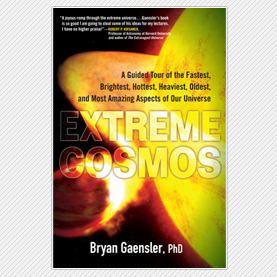
What's the densest object in the universe? The brightest? The loudest? In his new book Extreme Cosmos (Perigee, 2012), astronomer Bryan Gaensler reveals the cosmic record holders of these and many other titles. In an excerpt below, from the chapter "Extremes of Temperature," Gaensler explains the physics behind some of the hottest stars known:

We all know that if you heat something up, it glows. A poker in a fire shines a dull orange or red, while a conventional (incandescent) lightbulb works by heating up a tungsten filament to several thousand degrees so that it glows yellow or white. These are special cases of a universal process first properly explained by German physicist Max Planck: Virtually every object (whether on Earth or in space) radiates light, and the color of this light is tied to the object's temperature.