Ads 468x60px

Showing posts with label Helium. Show all posts

Friday, March 22, 2013

Sideline quasars helped to stifle early galaxy formation

University of Colorado Boulder astronomers targeting one of the brightest quasars glowing in the universe some 11 billion years ago say "sideline quasars" likely teamed up with it to heat abundant helium gas billions of years ago, preventing small galaxy formation.

CU-Boulder Professor Michael Shull and Research Associate David Syphers used the Hubble Space Telescope to look at the quasar -- the brilliant core of an active galaxy that acted as a "lighthouse" for the observations -- to better understand the conditions of the early universe. The scientists studied gaseous material between the telescope and the quasar with a $70 million ultraviolet spectrograph on Hubble designed by a team from CU-Boulder's Center for Astrophysics and Space Astronomy.

Monday, November 5, 2012

Farthest Supernova Yet Marked Death of Very Massive Star

Astronomers are reaching ever further back in time, seeking events from the earliest days of the universe. Now, the discovery of the farthest (and thus oldest) supernova ever seen is raising hopes that astronomers will soon detect the explosive deaths of the first stars to form after the universe's birth. These stars forged the first heavy elements, which helped create smaller and longer-lived stars like our own sun.

The earliest stars looked different from modern stars. The big bang produced only three light elements—hydrogen, helium, and a little lithium—but today, stars form in gas clouds that also contain heavier elements such as carbon and oxygen. These elements radiate away enough energy to eventually cool the clouds. When the clouds cool, they fragment into smaller clumps that collapse to spawn a plethora of mostly small stars.

Saturday, July 28, 2012

How Hot Is the Hottest Star?

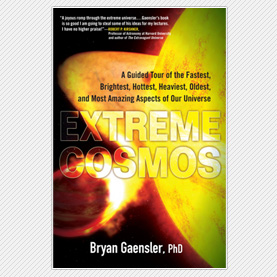
What's the densest object in the universe? The brightest? The loudest? In his new book Extreme Cosmos (Perigee, 2012), astronomer Bryan Gaensler reveals the cosmic record holders of these and many other titles. In an excerpt below, from the chapter "Extremes of Temperature," Gaensler explains the physics behind some of the hottest stars known:

We all know that if you heat something up, it glows. A poker in a fire shines a dull orange or red, while a conventional (incandescent) lightbulb works by heating up a tungsten filament to several thousand degrees so that it glows yellow or white. These are special cases of a universal process first properly explained by German physicist Max Planck: Virtually every object (whether on Earth or in space) radiates light, and the color of this light is tied to the object's temperature.

Tuesday, July 17, 2012

Viitorul soarelui nostru

Steaua din centrul imagini se numește „U” din constelația Camelopardalis (Girafa) și a fost ca Soarele.

Peste câteva miliarde de ani, Soarele va fi ca ea.

Stelele ca Soarele transformă, prin procesul de fuziune nucleară, hidrogenul în heliu și, după ce se termină hidrogenul, heliul în carbon. Pentru fiecare transformare este nevoie de o creștere în temperatură care se obține prin colapsarea nucleului, generat de forța de atracție a acestuia care la rândul ei depinde de masă. Dacă masa nu este prea mare (cum este cazul stelelor ca Soarele) procesul de fuziune se oprește la carbon.